


At some point, doing your job well stops feeling like enough. The work becomes predictable, the learning slows down, and growth starts to feel limited—even though you know you’re capable of more.
This is a common phase for many manual testers. As software teams move faster and rely more on automation, roles that blend testing with coding are becoming the norm. That shift can feel scary—but it also opens the door to new opportunities.
The good part? You don’t need to quit your job or turn your life upside down to make the move. With self-paced learning, building automation skills and transitioning to an SDET role can happen on your schedule, at your speed.

Who Is a Manual Tester—and How an SDET Role Builds on It
A manual tester focuses on making sure software works correctly from a user’s point of view. They understand requirements, execute test cases, find bugs, and work closely with developers to improve quality. Their strength lies in understanding user flows, edge cases, and real-world behavior.
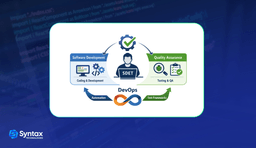
An SDET (Software Development Engineer in Test) takes this same testing foundation and adds automation skills to it. Instead of manually repeating tests, an SDET writes code to automate them so testing becomes faster and more reliable.
While manual testers concentrate on what needs testing, SDETs also think about how testing can be automated and scaled. This includes working with automation tools, basic programming, and understanding how tests fit into modern development workflows.
This evolution makes SDETs more in demand. For manual testers, becoming an SDET isn’t a career switch—it’s a natural progression that builds on skills they already have.

Why Automation Skills Are Non-Negotiable Today
Modern software teams release updates frequently—sometimes daily. Manually testing everything just doesn’t scale.
That’s why companies prefer testers who can:
- Automate repetitive test cases
- Catch bugs early in the development cycle
- Integrate tests into automated build pipelines
For example, instead of manually testing login functionality every sprint, an automated test can run in seconds whenever new code is added. This saves time, reduces human error, and speeds up releases.
What a Beginner-Friendly SDET Learning Journey Looks Like
A smooth transition to SDET doesn’t happen overnight. It follows a clear progression:
- Refresh testing fundamentals
Understanding testing concepts deeply helps automation make sense. - Learn programming basics for testers
Focus on logic, syntax, and writing simple scripts. - Understand automation frameworks
Learn how automated tests are structured and maintained. - Work on real-world test scenarios
Automate common workflows like login, forms, and APIs. - Explore industry-relevant tools
Version control, test runners, and basic CI/CD concepts. - Build portfolio-ready projects
Show what you can actually do—not just what you’ve learned.
Why Self-Paced Learning Is Ideal for Working Professionals
For busy professionals, self-paced learning makes all the difference. Here’s why it works so well:
- Learn anytime, anywhere—before work, after work, or on weekends
- Revisit lessons as many times as you need
- No pressure to keep up with a fast-moving batch
- Balance learning with work, family, and life
- Focus on hands-on practice, not just theory
- Move faster or slower based on your comfort level
This flexibility is especially helpful for manual testers who are already working full-time. That’s also why self-paced SDET programs—like the one offered by Syntax Technologies—are designed to fit around real work schedules while still focusing on practical, job-ready automation skills.

Conclusion
Moving from a manual tester to an SDET isn’t about starting over—it’s about building on what you already know. With the right automation skills and a flexible learning approach, the transition becomes practical and achievable.
If you’ve been feeling stuck, this could be your turning point. Learning at your own convenience allows you to grow without pressure, without career gaps, and without overwhelm.